Cards
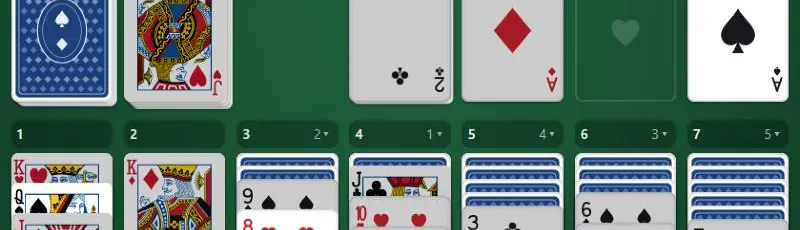
Hearts for four and Rummy for two to six, with the computer in any empty seat; and thirteen solitaires to play alone, each with a computer player of its own for a hint when you are stuck.
Hearts and Rummy
Hearts for four: pass three cards, follow suit, and keep the hearts and the queen of spades away from you. Rummy for two to six: draw, meld your sets and runs, lay off on anybody's melds, and go out first. Any empty seat is the computer's.
- Hints from the computer whenever you want one - on at first, and switched off in the table's settings.
- Alone with the computer, take your last move back, or let the computer play your seat, a move at a time or on until you stop it.
- Each club keeps its own house rules for each game.
- Every deal has a reference, so the same cards can be dealt again at a table of your own.
Thirteen solitaires
Klondike, drawing one card or three, and twelve more: FreeCell, Yukon, Spider in one, two or four suits, Spiderette, Scorpion, Forty Thieves, Canfield, Pyramid, TriPeaks, Golf, Clock and Accordion.
- A hint from the computer for every one, undo, and the game handed to the computer a move at a time when you want to watch it.
- "Can a bot do better?" once a game is over: the computer plays the same deal, and you see how far it got.
- Duplicate deals: everybody in a room plays the same cards once, the computer's own result beside theirs, ranked like a duplicate bridge session.
- Each room's leaders boards, one for each solitaire, ranked by the cards brought home - a game the computer moved in is never on them.
Your cards
Choose the card faces you like - classic, four-colour, a traditional design and a clear modern one - and any of twelve backs, once, for every card game and bridge. You may also shade the cards the rules will not let you play, or turn the shade off and have the rules say no only once a card is tried.
How our computer players think
A computer player at cards knows only what you would know in its place: its own hand, the cards played, and the cards face up on the table. It never looks at the other hands or the face-down cards.
- Hearts and Rummy. Unable to see the other hands, the computer deals the unseen cards out a number of ways that fit what has been played, plays each one on, and weighs which card does best across them all.
- Klondike. The face-down cards are dealt out a number of ways that fit what can be seen; each way is then searched for a win, and the move that most winning lines begin with is the one it makes. Where none is found, it looks ahead at what it can see.
- TriPeaks, Golf, Pyramid, Yukon and one-suit Spider. The same idea with every move tried: each move is played on in the same imagined deals, and the one that wins in the most is chosen.
- Canfield and Scorpion - and every game once nothing is hidden - vote as Klondike's does.
- Two- and four-suit Spider, Spiderette and Forty Thieves. Here guessing the hidden cards gained nothing, so the computer plans with what can be seen alone, each line ending where a card turns over or the stock is dealt.
- Whatever the game, it never goes back to a position the game has already been in, and when its search finds nothing it does nothing pointless: it deals a row, makes a useful move, or says the game is over.
This is perfect-information Monte Carlo - the same way of thinking as our bridge players - and it all runs in your own browser.
The other games
Back to the centre; how to find your way around, and what it costs (nothing): frequently asked questions.